
Interfaith weddings are becoming more common.
In this blog, Stephanie describes her struggle to find a representative of their faiths to officiate. The introduction describes her dilemma as stemming from, the now much more common, “curveball of falling for someone outside your religion.”
My friends, Katariina and Evan, created a ceremony that incorporated three different faith traditions. Katariina’s mother is Sinhalese, from the island of Sri Lanka, where the family practices Buddhism, and her father is from Finland, where Christianity is the faith of his family. Evan was raised with little formal religious practices, except for sprinklings of Judaism, from his father’s family. The avoided the issues faced by Stephanie by not having their wedding blessed by an official representative of any of their three faith traditions.
In the following description of a Sinhalese Buddhist ritual incorporated into the wedding, I show how Evan and Katariina combined a religious tradition into their modern experiences and values.
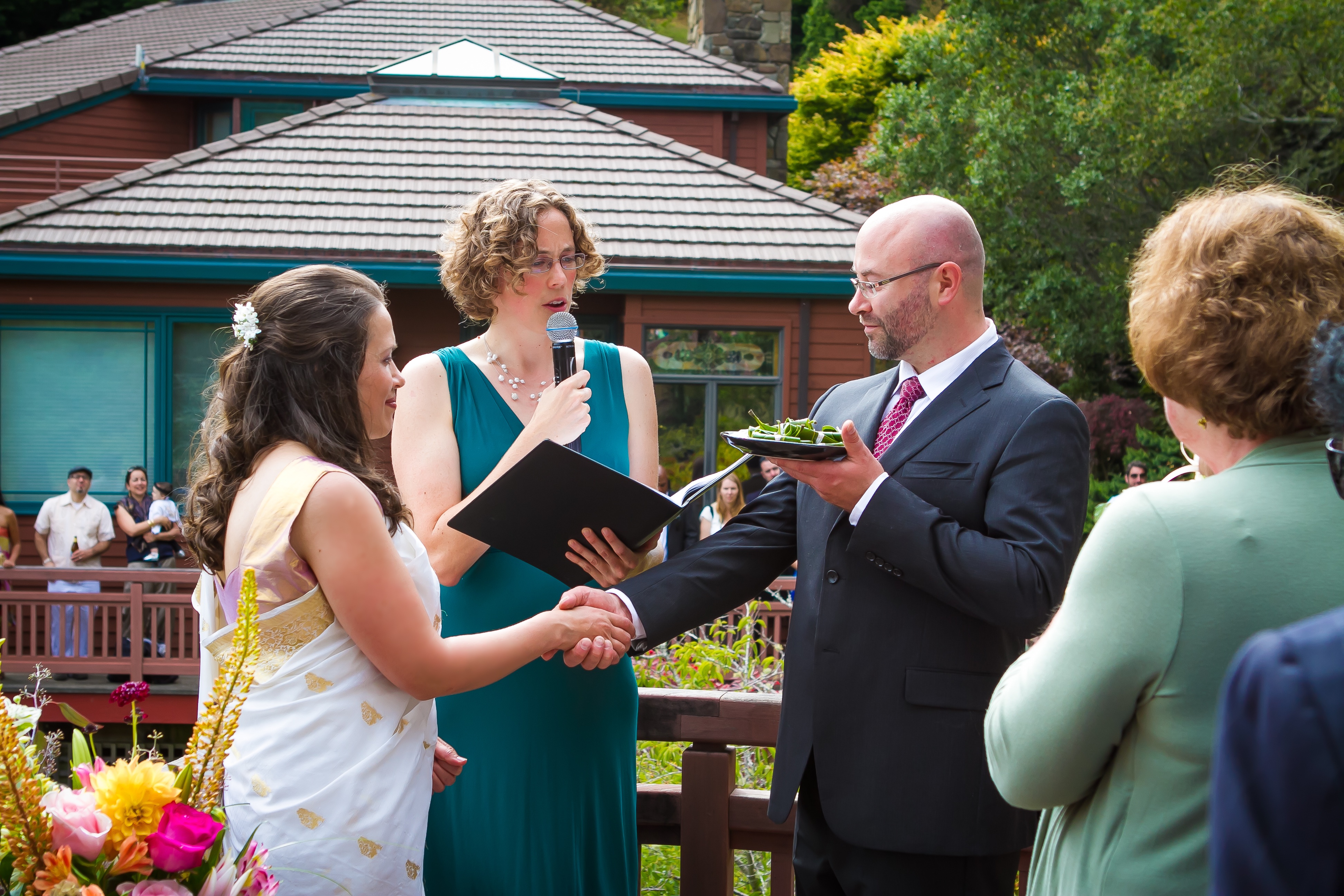
Evan and Katariina incorporate a Sinhalese ritual
As you can see in this photo, Katariina is dressed in a traditional Indian wedding sari – in fact, it is the same sari her mother wore on her wedding. Evan is holding a tray of 14 betel leaves, in the tradition of Sinhalese weddings. Inside each betel leaf is a coin. Evan placed 7 of the bundles on the altar and Katariina followed by placing the 7 bundles on the altar. This ritual is to remember the seven generations of relatives from each of the couple’s families that have come before. The second 7 bundles is to remember the 7 seven generations that will originate from their marriage.
This ritual incorporates many traditional values of marriage: wealth, children, and even patriarchy (with the man placing the bundles first). Yet, this couple does not fit these cultural norms: Katariina is marrying outside of the faith, they already have a child, and Katariina has a successful career outside of the home. Yet, this new family places great value on the broader values this tradition identifies: family, security, and unity. In incorporating the ritual, they were able to filter their current experience through their family’s history. Since most members of Katariina’s Sri Lankan family could not make the trip to attend the wedding, this ritual served another role of remembering and making present that family, country, and culture.
 Katherine Kunz, Ph.D.